The foundation of Chinese medicine is balance. Everything we do seeks to achieve equilibrium in mind, body, and spirit. To achieve this outcome, your practitioner may opt for acupuncture, herbal medicine, nutritional guidance, manual therapy, and/or breath and movement practices in the form of tai chi or qigong. A lesser-known option in this project can include magnet therapy. Not every acupuncturist offers it, but those of us who do view them as a marvelous option, especially for pain relief and scar revision.
Have you ever heard of magnet therapy, and if so, have you tried it?
If you haven’t, it may be just that your practitioner has other interests. It is true that magnet therapy isn’t usually a big focus in every Chinese medicine practice. If you’re intrigued and want to try it you may need to do a little digging to find a practitioner who offers it.
If you do have a practitioner who includes magnet therapy in their protocols you may be familiar with standard options. For example, some of us use cups that have magnets embedded in them. A relatively commonplace option that people often will continue at home involves small magnets taped to specific areas of your ear (auricular therapy). There are practitioners who offer Korean hand therapy, which involves placing the magnets that you would use for auricular therapy on specific points of the hand. It’s similar to reflexology in that the hands are considered a holograph for the rest of the body and the magnets are set accordingly.
The small tape-on magnets are great for use at home and even better for people who aren’t necessarily comfortable with acupuncture needles. But what about more involved magnet therapy? That is where my offerings differ from the average. Speaking for myself and my practice, I became expert in magnet therapy because I have some niche specialties that require a lot of creativity on my part.
One of my big areas is HSD/hEDS support. I wrote a book on the topic, Chinese Medicine and the Management of Hypermobile Ehlers-Danlos Syndrome: A Guide for Practitioners (Singing Dragon 2023), and have a dedicated website for this community. The HSD stands for hypermobility spectrum disorder. The hEDS references hypermobile Ehlers-Danlos syndrome, which is a collagen disorder that presents differently in each individual patient and is extremely complicated across the board. If I can find ways to move qi without pressing on fragile joints, I jump on it. In part, this is what got me into magnets.
“HH & hEDS aims to provide information, inspiration, and support for anyone who is hypermobile, wherever they find themselves on the spectrum. Are you undiagnosed but seeking information? Have you been told that you fit in the box labeled hypermobility spectrum disorder (HSD)? Or are you living with diagnosed hypermobile Ehlers Danlos syndrome? If none of the above applies to you, then…are you a healthcare provider who wants to expand your horizons for the benefit of your patients?
–Holistic Health & hEDS (About)
HH & hEDS is for all of us.”
Another niche relates to injury recovery. In China, a tui na (pronounced “twee nah,” this is Chinese manual therapy) practitioner may specialize in acute injury and even set bones. I can’t do that here in the USA. What I can do (and am really good at) is working with people who have a broken bone and who were given a sling or a boot and a short window of time to see how they heal before deciding on surgery. No bone setting but, instead, gentle manipulation of the soft tissue to align fascia and move qi and Blood (capitalized to indicate the Chinese version of blood, which encompasses more ideas than just the liquid in your veins and arteries). I have a great track record of patients not needing surgery after all, and of their surgeon signing off on the no need for surgery option while marveling at how quickly and well they were healing.
“A foundation of Chinese medical thought focuses on circulation. When there is stagnant blood, lymph, and qi due to swelling, your practitioner can rely on acupuncture, traditional bodywork therapy modalities, and/or herbs to gently and appropriately get things moving in the right direction. Ultimately, the goal is to restore balance not just in terms of circulation, but also with respect to the way the fascia and other tissues align.”
–Acupuncture and Chinese Medicine For Pain Relief and Healing, Part I: Sprains, Strains, and Broken Bones
Another niche relates to scar revision. Scar work is art work and truly, I love working on scars.
“I love working on scars. Exceptional scar work requires brain cells and good listening hands. When the scar artist (or, as I like to think of myself, the SCAR GODDESS) palpates the scar, there are many things to learn.”
–Every Scar Tells a Story (Physical Scars and What to Consider About Yours)
I also work on musicians, especially string instrument players. Both of these specialty areas require creativity and the ability to get into the tissue with the least amount of force and pressure.
“The long story short: Chinese manual therapy, including but not limited to tui na, is an ancient practice that can genuinely make a difference in your life, your health, and your capacity to perform at top peak as a musician.”
–A Musician’s Guide to Health and Wellness the Traditional Chinese Way: Taking Care of Yourself for the Long Haul With Tui Na
When I started using magnets and studying all the options, the history, and the benefits, I knew I was onto something useful, and not just for the above-mentioned niche areas. Magnets can be great for pain relief, they can be fantastic for tendon and ligament health, and they may improve sleep, smooth anxiety levels, and support stronger digestion. In essence, I move qi with magnets the way I can with acupuncture needles and patients are amazed at the results. Heck, when I started using magnets, I was amazed by the results I was getting.
*****
*****
Magnet therapy has an interesting history. Magnets were known and used from India and China to the Eastern Mediterranean and Africa for centuries. Magnets themselves have their own intriguing history, one rooted in Asia. Greek legend holds that a shepherd, one Magnus, noticed lodestones, or naturally occurring magnetized rocks (magnetite) that clung to the iron nails of his shoes as he walked in the Magnesia region that was then Greece and is now a part of Turkey. Sometime around 200 BCE, Galen wrote about magnets and their use as purgatives. By the 11th century, Chinese explorers used lodestones as compasses. (There’s a lot more to this phase of history but discussing it really would be quite a digression…)
It is also way too much for this blog post, but tracing the scientific history of magnets in the West and observing how researchers over the course of centuries is also quite fascinating. Indeed, the earth itself is one great big magnet with a north and a south magnetic pole. If you really want to have an interesting conversation, ask a physicist about magnets. You might get a marvelous lecture on what this branch of science studies as one of the universe’s four basic forces.
But what about magnets and your wellbeing? Keep in mind that Western biomedicine uses them too. For example, the FDA has approved pulsed electromagnetic field therapy (PEMF) for pain relief. An interesting development in the field of mental health is TMS, or transcranial magnetic stimulation, which uses magnetic pulses focused on specific regions of the brain and is used to treat depression, OCD, and PTSD when drug therapies have failed. In orthopedic surgery, magnets are used for limb lengthening and scoliosis. Current research is looking at magnets for joint stabilization and joint replacement procedures.
Biomedicine isn’t necessarily convinced about the efficacy of static magnets (this is your standard magnet) for pain but that does not mean that they don’t work. Chinese medicine, on our end of things, respects the potential of static magnets for healing purposes.
Too often, people view Chinese medicine as acupuncture and only acupuncture. Modalities like cupping pretty much got co-opted in the public imaginary by physical therapists, while gua sha has of late been taken over by beauty influencers. It really is a shame, because cupping or gua sha delivered by an actual licensed acupuncturist is not the same (and it’s usually much better) than what you get on TikTok or at the PT’s office. And there is much more to Chinese medicine than either of these modalities.
There are five pillars of Chinese medicine and they include: acupuncture, herbal medicine, nutritional therapy, tui na, and qigong. Moving qi and balancing the system can be the result of any one (or all) of these pillars. What matters is that the qi flows freely and there is a right balance of yin and yang. Western biomedicine has their own version of this story, and that would be homeostasis, aka “not too much, not too little, and everything in right balance.” The different between us and them is that Chinese medicine has a philosophical perspective on balance but the bottom line is this: whether it’s homeostasis or the smooth interplay of yin and yang, balance is key to wellbeing.
As to qi? Your allopathic physician will talk about hormones, neurotransmitters, and internal energy along the lines of ATP, or mitochondrial function. Qi is an energy, it is a philosophical idea, it is the electricity and internal micro-movements of the body. We all have our stories about it and the Chinese one isn’t as fanciful as some would make it to be.
The TL/DR: We have a lot of tools in our toolboxes as practitioners of Chinese medicine and magnet therapy can be one of them.
*****
*****
What does a treatment at my office look like?
I do not use the magnet points in cups because I think they’re irritating, to be honest. However, I will place magnets on ear points and on hands or other body parts, like on the wrists for nausea.
I also have a method that I have been developing that uses magnetic forks and special neodymium magnets. (These rare earth magnets consist of an alloy of neodymium, iron, and boron that creates strong and powerful magnets). My approach is a combination of what I do with tui na (and I am a very dedicated practitioner and have been for a decade plus by now) and what I might do with acupuncture needles. The mechanism for this, if you look at it from a scientific perspective, relates to the way magnets are thought to affect cellular ions (mainly sodium and calcium), strengthen local blood circulation, and shift nerve excitability. However, since I view these things via the lens of Chinese medicine, what happens is that I move qi and Blood.
In many instances, I will hold the magnet just a tiny bit away from the skin, hovering until I can feel the person’s qi with my other hand. Patients will report that they can feel the magnetism even when the magnet is not touching them or barely doing so. The magnet elicits the qi and my hand guides it along its way, if I am using one hand-held magnet. I could equally use a fork in one hand and a curved magnet in the other; the two magnets speak to each other through the fascia and other tissues.
*****
*****
Depending on the patient’s goals, tui na enhanced by magnets may be the whole treatment. In other instances, the magnets are a warm-up for the acupuncture that takes center stage. Either way, it really is something to feel the qi and guide it through the body not with needles but, instead, with my hands. Tui na alone makes this possible, but using the magnets gives a different entryway into the tissues and the resulting feel of qi is unique as a result. And patients love the treatments.
Chinese medicine is marvelous no matter what the practitioner offers. Needles and herbs? Great! Tui na, LED light therapy, and nutritional guidance? Superb! The magnets just make things a little more bespoke, that’s all, and you get a lot of activity with very little pressure plus, if you like, no needles (although, to be fair, acupuncture needles do not hurt). I could go on and on, but will stop by saying: magnet therapy is amazing. A-MAZ-ing.
Are you ready to try it?
*****
*****
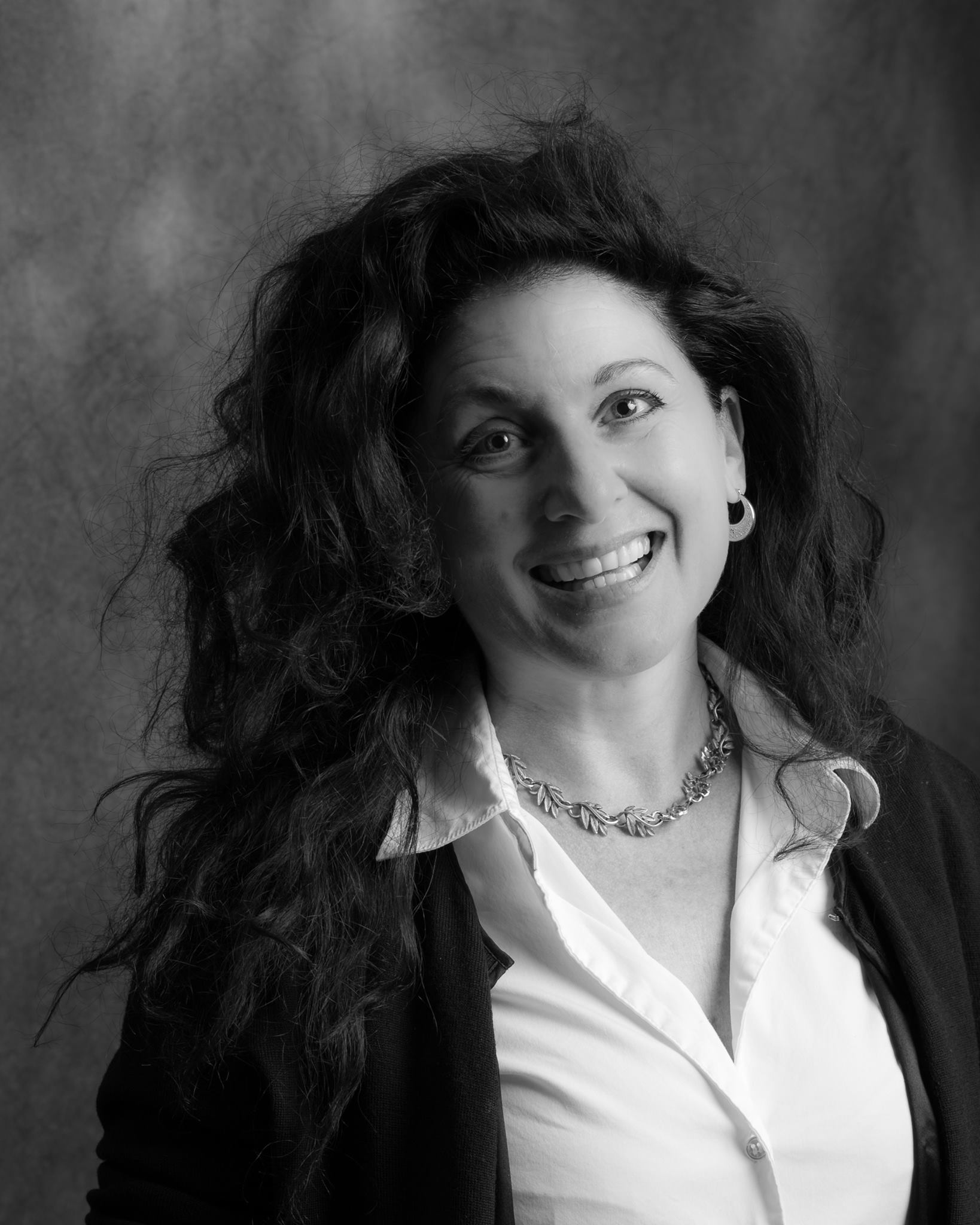
Dr. Paula Bruno, Ph.D., L.Ac., is a licensed acupuncturist and herbalist, an AOBTA-CP traditional Chinese bodywork therapist, a health coach, and an author. She maintains an active and growing practice at her Austin, TX office. Dr. Bruno is also available for distance appointments for wellness consultation or coaching.
In her first career, she was a Spanish professor.
Dr. Bruno’s specialties as a Chinese medicine practitioner include: • Musculoskeletal health (acute or chronic pain relief; Ehlers Danlos syndrome & hypermobility support) • Digestive support, gut health, and weight loss • Aesthetic treatment, including scar revision • Men’s health • General preventive care and wellness support for all persons.
She is the author of Chinese Medicine and the Management of Hypermobile Ehlers Danlos Syndrome: A Practitioner’s Guide. Dr. Bruno also maintains a second website, holistichealthandheds.com, with resources and information curated specifically for people with hEDS and HSD.
When you are ready to discover what traditional medicine plus a vibrant and engaged approach to holistic health can do for you, either contact Dr. Bruno or book an appointment online.
*****
*****
Two Hearts Wellness does not accept paid advertising on this website & only uses strictly necessary cookies.
Note: Material on this web site site is not intended to diagnose, prevent, treat, or cure any disease, illness, or ailment. A Chinese medicine practitioner in Texas identifies syndrome patterns but does not diagnose illness. Material on this web site does not purport to identify syndrome patterns.
*****

