The title of this blog post makes it clear what I think about AI. To a point, it’s enough to simply declare that my website doesn’t peddle slopaganda. But I also want to share my thoughts about writing, being a writer, and my love for writing. I want this to be the post that makes my promise to you, dear reader, about who I am as a writer and practitioner of Chinese medicine. The conclusion of this essay (that I loathe AI and will never contaminate my writing with it) is already obvious. But my whys are worth reading, I think. They are heartfelt and true and shared in the hopes that you ponder your own whys and maybe feel some inspiration or solidarity.
So without further ado…
*****
*****
Who am I?
I’m a literature Ph.D., for one thing. I taught myself to read when I was a tiny child and it was no accident that I earned first a double major B.A. in Comparative Literature and Italian. After that, I acquired two MA degrees (Italian and Spanish, respectively). I then slogged through two Ph.D. minors (Italian and Art History) and the Ph.D., after which I became a Spanish professor. I love to read. I love to write. I have won awards for my writing and had a respectable publication record as an academic. After switching careers to Chinese medicine, I wrote a book, Chinese Medicine and the Management of Hypermobile Ehlers-Danlos Syndrome: A Guide for Practitioners (Singing Dragon 2023). I share a new blog post here twice a month and I share another two essays each month at my EDS-dedicated website. I remain a voracious reader.
I will always be Professor Bruno in my heart. Academia and teaching are such a fundatmental part of my heart and soul.
In fact… as a professor, I sincerely cared about my students’ writing and I read their work with genuine interest. In the advanced courses (literature and culture), students would start a term project that began with a short proposal that included a very short bibliography. I’d read this, give feedback, and provide guidance for round two: a proper abstract with a meaningful bibliography. The students would then present their ideas to their peers and practice speaking in front of the class. Then they’d write their first draft, which I would read carefully. Finally, they’d turn in the completed draft and present their work to their peers.
At every step during the way I was reading their work and providing meaningful commentary in support of their intellectual development. I read carefully and put genuine thought into my feedback.
Sometimes, students would bitch during the semester. And yet, year after year, the student evaluations would mention that I taught them how to write and present ideas in front of a classroom. Students were grateful for this. I worked very hard for them, I expected them to work very hard for me, and the results were genuinely gratifying. All exams were essay exams too. If you were in any of my classes, you developed skill as a writer, a reader, and a speaker.
I am so glad not to be a professor now. It would crush my soul to have to give actual grades to students who hand in AI slop. I would have to read that trash and then grade it, and–let’s be real here–there would be quite a few students who would expect an A for their perfidy.
Writing takes practice. When I was in my first graduate program (my second was in Chinese medicine, where I earned my third MA degree), I would sit down daily with my favorite scholars’ work and hand-copy passages that I wanted to learn to emulate. My mom, who was also an academic and a renowned writer in her own right, taught me to do this. Eventually, I developed my own academic writer’s voice because I put in the time and I dedicated the effort.
This is who I am.
*****
*****
Authentic? Yes.
When I first started this blog in 2014 (YIKES!) I once complained to a friend about how much time I was putting into writing my blog posts. My friend laughed and said I should take no longer than two hours per post at maximum. This blew my gourd. I write a first draft of my blog post, let it sit for a while, revise it, let it sit, and then complete the final product. I spend about two hours on the first draft alone. I also, now that I have become fairly good with Canva, make all my own graphics. This is time-consuming.
But it’s all me. How could I expect anyone to read my blog posts if I cranked them out in two hours and didn’t even bother to revise? If I can’t be bothered, then why should you?
*****
*****
Reading for thee but no writing for me?
I’m saving my thoughts on what utter shite AI is in chronic illness online spaces for my EDS-dedicated website. That is an entire new avenue of thought regarding the pernicious effect of AI.
However, I will say this much here: when I see influencers with their loooooong blog posts that clearly were not written by the pundit in question, I have to wonder. How flipping dare they ask others to read their blog posts when clearly, they never wrote those essays? Same-same in the online groups. People are busting out with these 2000-word screeds and sharing them online and they apparently expect that people will read them. (Do they really? Or is just getting some clicks and a like enough here?)
That’s so ballsy.
If you don’t care enough to write it, why should I read it? Why should I care about anyone’s vomitous AI slop? The slimy, nasty, tinny writing voice and the unctuous pretense that the “author” of said post “gets me” and is here to “share” really doesn’t do it for me. At this point, I just block the poster and think “Bot.” I don’t read blog posts that are obvious slop either. Why should I waste my brain cells on this kind of filth?
And just because Tracy Flick *cough* I mean Reese Witherspoon is trying to float the idea that learning to navigate AI is a feminist act and Sandra Bullock is trying to be earnest about her push for all of us to “learn more” I just… What can I say? Thanks, you two brilliant pundits (hey, maybe you two can get with George Clooney and write a few things about politics…I mean…) and no thanks.
If you don’t care enough about me, your reader, to write it…then don’t ask me to read it. It’s that simple. (And off-topic though it may be? No, I do not ever want to watch AI “actors” and “actresses” or listen to AI voices. Never, not ever).
*****
*****
My book
I wrote Chinese Medicine and the Management of Hypermobile Ehlers-Danlos Syndrome without any contamination from AI. None. And what’s sad here is that AI makes use of authors like me to hone their slimy, foul emissions. I, having spent most of my adult life earning my credentials, wrote a substantive book about an extremely complex topic. AI, for its part, used me and other authors to come into being.
Yuck.
TL/DR
I may accidentally use an AI-generated image on my Canva graphics. I avoid the obvious and possible-sort of-is-this-real-or-not? ones, but it is probably inevitable that I miss a clue and use something from the slime pit.
Other than that, though?
You can trust me, dear reader. I always do my homework and I don’t make pronouncements that I cannot back up, either via direct source referral or–at the very least–as a result of a theoretical basis that I can defend. I take time when I write. I take time when I study. I read real books. As a practitioner of Chinese medicine, I continue to study as though the conditions I treat were new to me. I don’t and will not ever fire up the Chat GPT and try to figure out a patient’s condition. Either I know (and I do some extra reading just because) or I recognize that I need to add to my knowledge bank (and then I really pull out all the stops to research both the Western biomedical and the Chinese medicine perspectives). But I will never ask the AI to do my thinking for me. Never. Never, EVER.
It seems to me that the general public is cottoning to the enshittification wrought by AI. My hope, if you are reading this, is that you will feel reassured that you can come here and find real writing that is the fruit of genuine and very real thought.
I appreciate that anyone would read my blog posts. I hope, as you read, that you can see that this is true.
This is my promise to you, dear reader: No AI slop from me. Never. Never, ever.
*****
*****
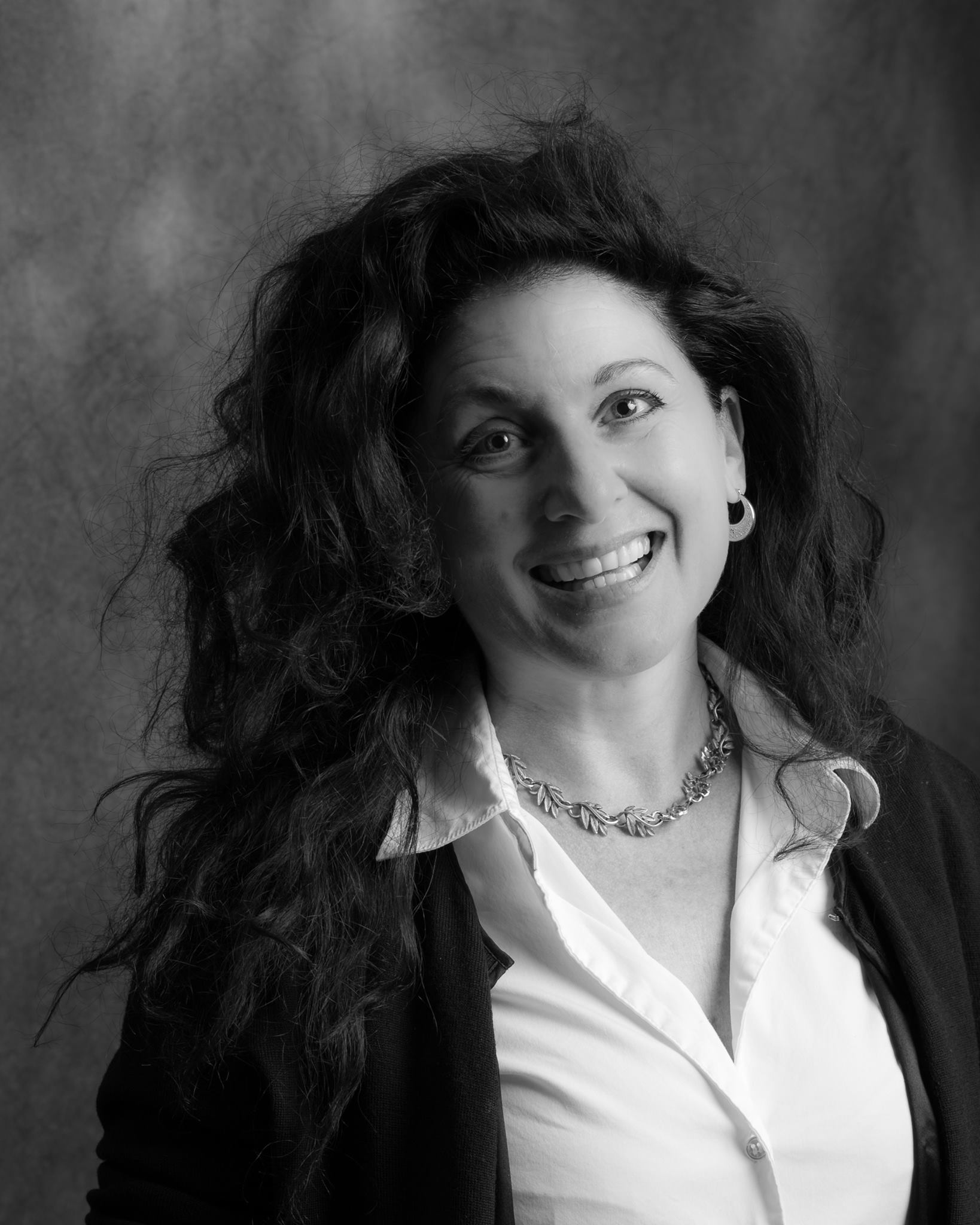
Dr. Paula Bruno, Ph.D., L.Ac., is a licensed acupuncturist and herbalist, an AOBTA-CP traditional Chinese bodywork therapist, a health coach, and an author. She maintains an active and growing practice at her Austin, TX office. Dr. Bruno is also available for distance appointments for wellness consultation or coaching.
In her first career, she was a Spanish professor.
Dr. Bruno’s specialties as a Chinese medicine practitioner include: • Musculoskeletal health (acute or chronic pain relief; Ehlers Danlos syndrome & hypermobility support) • Digestive support, gut health, and weight loss • Aesthetic treatment, including scar revision • Men’s health • General preventive care and wellness support for all persons.
She is the author of Chinese Medicine and the Management of Hypermobile Ehlers Danlos Syndrome: A Practitioner’s Guide. Dr. Bruno also maintains a second website, holistichealthandheds.com, with resources and information curated specifically for people with hEDS and HSD.
When you are ready to discover what traditional medicine plus a vibrant and engaged approach to holistic health can do for you, either contact Dr. Bruno or book an appointment online.
*****
*****
Two Hearts Wellness does not accept paid advertising on this website & only uses strictly necessary cookies.
Note: Material on this web site site is not intended to diagnose, prevent, treat, or cure any disease, illness, or ailment. A Chinese medicine practitioner in Texas identifies syndrome patterns but does not diagnose illness. Material on this web site does not purport to identify syndrome patterns.
*****

