Have you thought about your microbiome lately? Stop for a second and look at your abdomen. There’s a whole world inside there, if you ponder it. The pathway that starts at your mouth and ends via your undercarriage is one road to follow for a successful health journey and there’s more to it than dieting and lectures about probiotics. Your innards are exciting! They are full of bacteria, fungus, and even viruses that can be beneficial…or not.
But if they’re not? Chinese medicine has options for you, ones that don’t involve prescription drugs that may leave you with gastroparesis or other adverse outcomes. Yes, it can be slower to go this route but you might decide that it is worth it to you to mindfully decide just how much you want to prioritize your gut health. When you prioritize your digestion, you are prioritizing your overall wellbeing. Gut health is true wealth, so keep reading for some useful information that might apply to yours.
*****
*****
My hope with this blog post is to keep it simple and to the point so that you can follow up on what interests you and easily skim the less-compelling parts. (Although…really, there is nothing boring about gut health.). I’ll start with by narrating the biomedical story of why you should care about your gut health and then follow with some thoughts from the perspective of my practice as an acupuncturist and health coach.
One of the things I dearly love about Chinese medicine is the way we view the gut. The Spleen (capitalized to indicate that these are Chinese medicine’s concepts, which may mean it’s an umbrella category or the specific organ itself, depending) is central to health. There is a long, long history and even a specific perspective, espoused by what is known as the Earth School of thought, regarding just how important digestion and gut health is to the entire self.
Gut health affects mind, body, and soul. When you tend to your gut, you tend to your whole-self health. Have a look and see…
*****
*****
Mind
From conditions (anxiety, hypersensitivity) that most people have experienced at one point or another in their lives to serious health developments that are best prevented whenever possible (Alzheimer’s disease, for instance), gut health is a key factor. When you pay attention to your microbiome you are supporting your mental health and making life today easier. You also could be paving the way for a healthier later stage of life. Gut health and brain health go hand in hand.
Mental health:
A disrupted gut microbiome affects mood, for one thing. Most of a person’s serotonin is made in the small intestine; when things aren’t going so well here, the vagus (“rest and digest”) nerve can’t function properly either. The enteric nervous system is, in essence, a second brain. When the gut is leaky, the rest of the body can become inflamed and this, too, can lead to feelings of anxiety and distress. Sure, life events and unhealed trauma can affect mood…but so can gut bacteria.
*****
*****
Neurological health:
Biomedicine views dysbiosis as a factor in Alzheimer’s disease. An unhealthy microbiome can result in neuroinflammation and contribute to the amyloid plaques and tau tangles that disrupt communication in the brain and contribute to cell death. This in turn leads to dementia. And though diet and microbiome health aren’t the only factors involved, it makes sense to take a look at your family history and decide if starting early to eat intentionally for brain health is in your best interest.
Chinese medicine approach:
You might be surprised at how much your practitioner will focus on gut health if you go and ask for help with distress or overwhelm. When it’s an anxiety-related presentation, we might focus on Liver or Spleen. If it’s a neurological condition, we might address Wind or Phlegm (also capitalized to indicate CM). Any one of the modalities your practitioner offers (from acupuncture to herbs to breathwork, qigong, nutritional education, and/or manual therapy) can be of service to your gut and mental health.
Interestingly, ancient Chinese medicine described a condition they saw as Phlegm misting the mind long before there was science to test and identify what happens in a brain attacked by Alzheimer’s disease. However, it’s described though (and this is also true for other neurological conditions like Parkinson’s disease), diet and a healthy microbiome are a contributing factor to health or its opposite. For preventive brain care, your practitioner will probably prescribe an herbal formula and give you some information about food choices to go along with your acupuncture treatment in these instances. For stroke recover or Parkinson’s or Alzheimer’s disease, your best bet might be to find someone who specializes in neuro-acupuncture, a method of scalp acupuncture that is evidence-based and relatively modern as far as Chinese medicine goes.
*****
*****
Body
The inspiration to take a good look at one’s gut health is often connected to weight and/or digestion. More and more, it’s becoming recognized that the microbiome also affects skin too. Western medicine has its approaches and perception; Chinese medicine, equally so. There is some overlap, but it is worth considering each and deciding from an empowered perspective. Knowledge is power when it comes to wellbeing, I believe.
Overweight:
There are a few theories about weight and weight loss, and two common ones are the set point theory and the position that weight loss or gain is the result of calories in/calories out. In the first, a person has their set point and that fighting it and keeping the weight off is really hard. Calories in/calories out posits that weight is only affected by what a person takes in, food-wise, vs. what they burn off via their daily activity. Both of these are simplistic, though, and make it easier and easier to justify taking drugs or having weight loss surgery. Neither give all due respect to the role of the gut microbiome and how it affects nutrient uptake and the processing of food. Bottom line? A weight loss program that acknowledges the role of the microbiome is generally going to be more successful than one which does not.
Digestive and/or metabolic concerns:
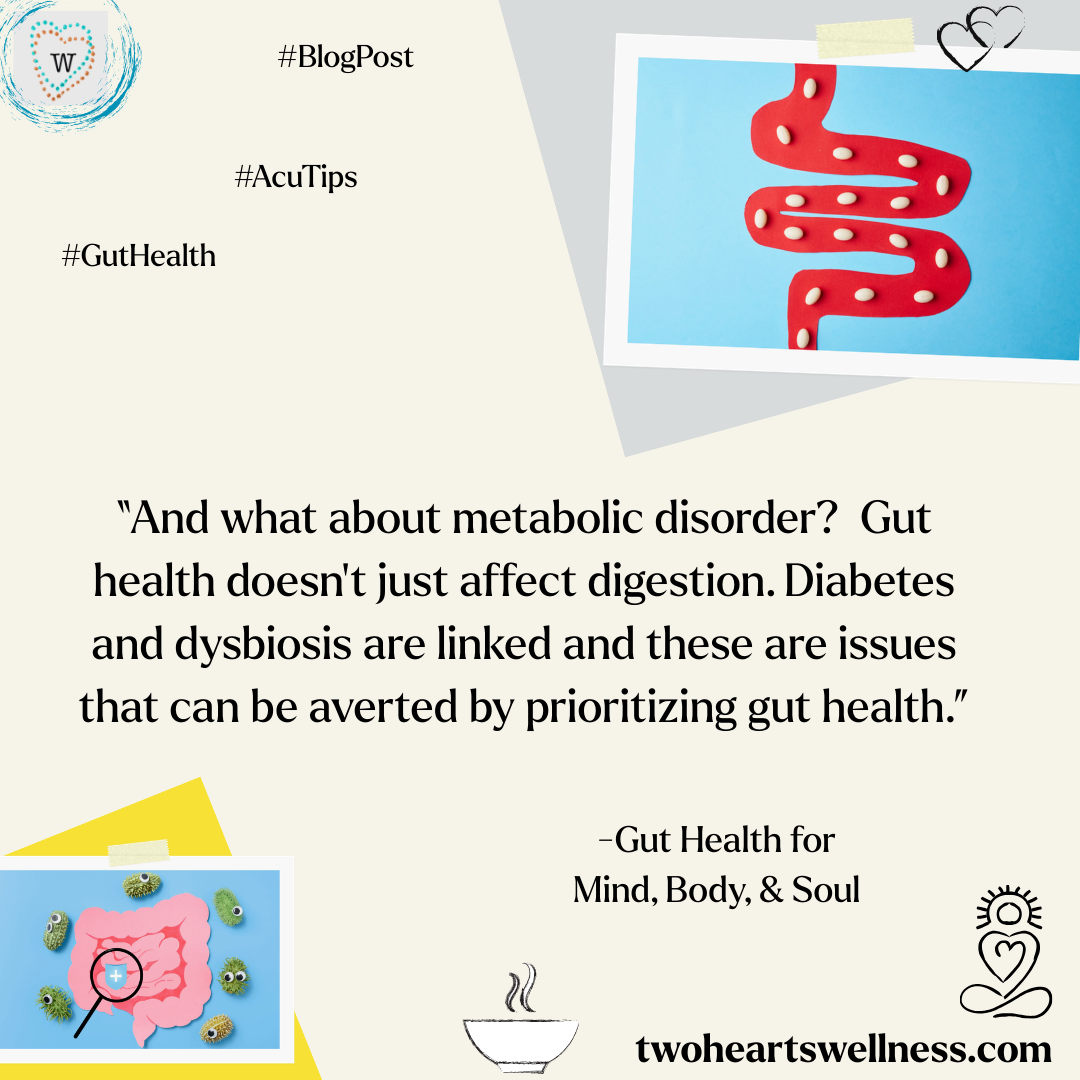
Nobody is happy to be bloated after every meal and having gas or gurgling or anything more extreme is a real buzz kill. Anyone with IBS or any other bowel condition knows how challenging these conditions can be. And what about metabolic disorder? Gut health doesn’t just affect digestion. Diabetes and dysbiosis are linked and these are issues that can be averted by prioritizing gut health.
*****
*****
Skin:
From dull skin to painfully flaring acne, the microbiome is never far from the root cause. The same goes for more complicated skin issues, from eczema to rosacea to MCAS-driven rashes. Some people are fortunate and can go to a dermatologist, get their prescription, take it, and voilà: all is resolved. That’s not always how it goes, though, and though even dermatologists will give recommendations for probiotics and even, maybe, diet shifts, to go along with the prescription, that doesn’t always mean success. Sometimes, a person really needs to take a longer route and make their health journey an intentional and steady quest to heal their gut.
Chinese medicine approach:
If you are challenged by eczema or psoriasis or cystic acne, you might want to try to find an acupuncturist who does cosmetic work or who specifically mentions on their website that they treat these conditions. Any acupuncturist worth their salt can treat these conditions but you probably know if you’re complicated enough to need a specialist. If so, find a specialist. (And this also goes for people who have histamine intolerance or MCAS: these difficult conditions do require a specialist for best results).1
That said, you do have options if you have the above-listed weight or metabolic health concerns. These are all issues that most of us in Chinese medicine treat fairly regularly. If it’s a weight issue, there are herbal formulas for drying Dampness and boosting digestive fire (aka metabolism), we can give acupuncture treatment, and we might suggest some breath and movement guidance. The same goes for a diabetes treatment or one for IBS or food sensitivities. Do you need to change your lifestyle? A health coach can inspire you, encourage you, and give you the support and accountability that will get you where you want to go. In my practice, I offer health coaching as well.
*****
*****
Soul
There’s more to gut health than the tangible. People have gut feelings in response to events or possibilities. When something sticks in our craw, we feel that we can’t stomach something, or we say, “That is just nauseating,” there’s a reason why these phrases resonate. Sometimes, when a person has ongoing health concerns, we might want to consider if this is what’s going on for them. Are there issues in life that they cannot swallow? (In Chinese medicine, we call that plum pit qi).
Sometimes, gut health issues don’t have a clear cause. The lab tests say you’re fine. Your doctor can’t find anything so they suggest antidepressants or tell you that you need to lose weight or give up certain food items. But the idea that your soul or spirit or inner spark (however you view these things) is calling for healing through the lines of your innards is not necessarily something you’d hear at your MD’s office. And that’s fine. You can always work with an acupuncturist if that approach speaks to you.
Connection with all that sustains you:
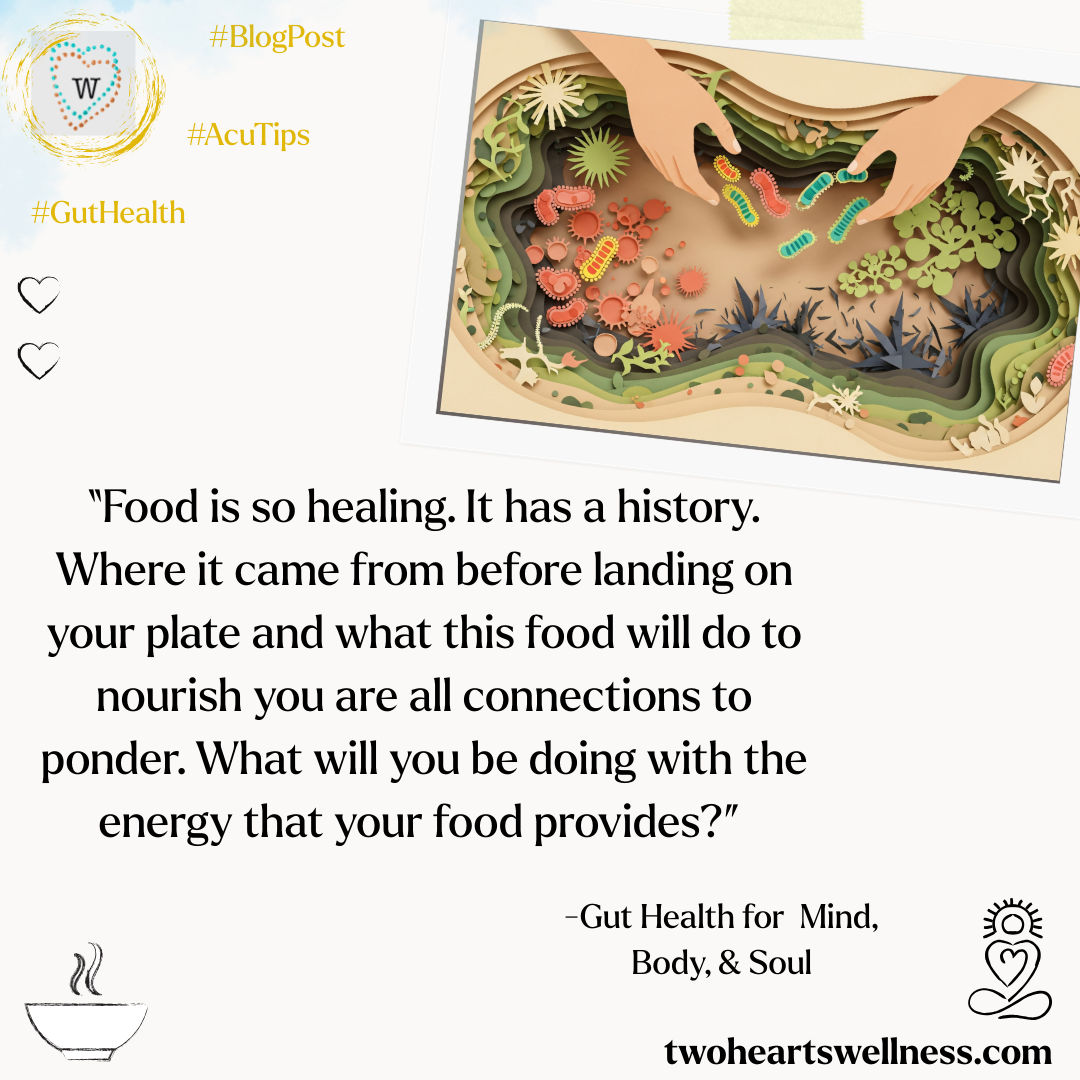
Food is so healing. It has a history. Where it came from before landing on your plate and what this food will do to nourish you are all connections to ponder. What will you be doing with the energy that this food provides? What about thinking about where that food came from? What about intuitive and mindful eating? When we treat our insides as part of a larger chain of events, we learn a few things. What do you think you can learn from pondering your food?
The subject of intuitive vs. mindful eating is a whole topic in and of itself. For consideration of this subject in the context of complex health presentations, see “Intuitive Eating vs. Mindful Eating–Which Is Better For You? (Some Tips For Folks With EDS, MCAS, &/or POTS).”
Digestion as metaphor:
I’m not a practitioner who thinks that people can be fixed only if they have a marvelous attitude, and if they’re not healing, then clearly, it’s because they don’t want to try. No, no, no. Consequently, I am mindful about bringing metaphysical considerations into the discussion. Instead, I’ll simply ask the patient if they feel like there is a metaphoric aspect to their issue. If the answer is yes, then we address things at that level.
And what I find beautiful about this approach?
When the digestive issue is a metaphor and there is that ah-ha moment, it’s magical. If it’s not there, that’s fine and the elusive root cause will be found elsewhere. But if it resonates, it resonates. It’s not the dismissive or gaslighting approach that only accepts lab results and discounts gut feelings or deeply-felt healing journeys. It’s Chinese medicine (with a twist of Mediterranean soul, as I do bring my own cultural background to the treatment) and an opportunity to bring healing via the gut as metaphor.
*****
*****
Chinese medicine approach:
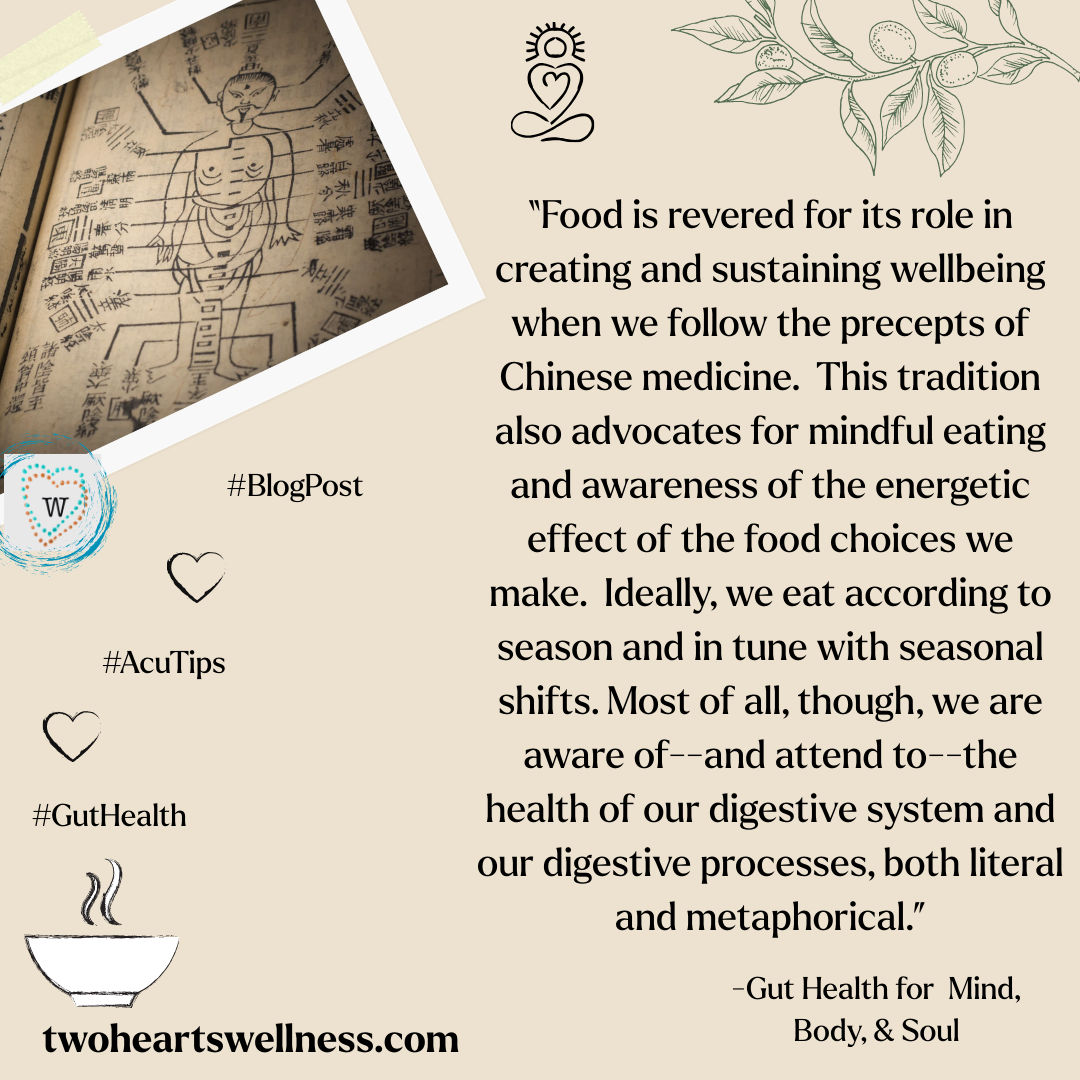
Food is revered for its role in creating and sustaining wellbeing when we follow the precepts of Chinese medicine. This tradition also advocates for mindful eating and awareness of the energetic effect of the food choices we make. Ideally, we eat according to season and in tune with seasonal shifts. Most of all, though, we are aware of–and attend to–the health of our digestive system and our digestive processes, both literal and metaphorical.
Gut health is whole-self health. And if you haven’t thought much about yours until now, I hope this essay has persuaded you to reconsider how you take care of this important element of your being.
Are you ready to try something new?
*****
*****
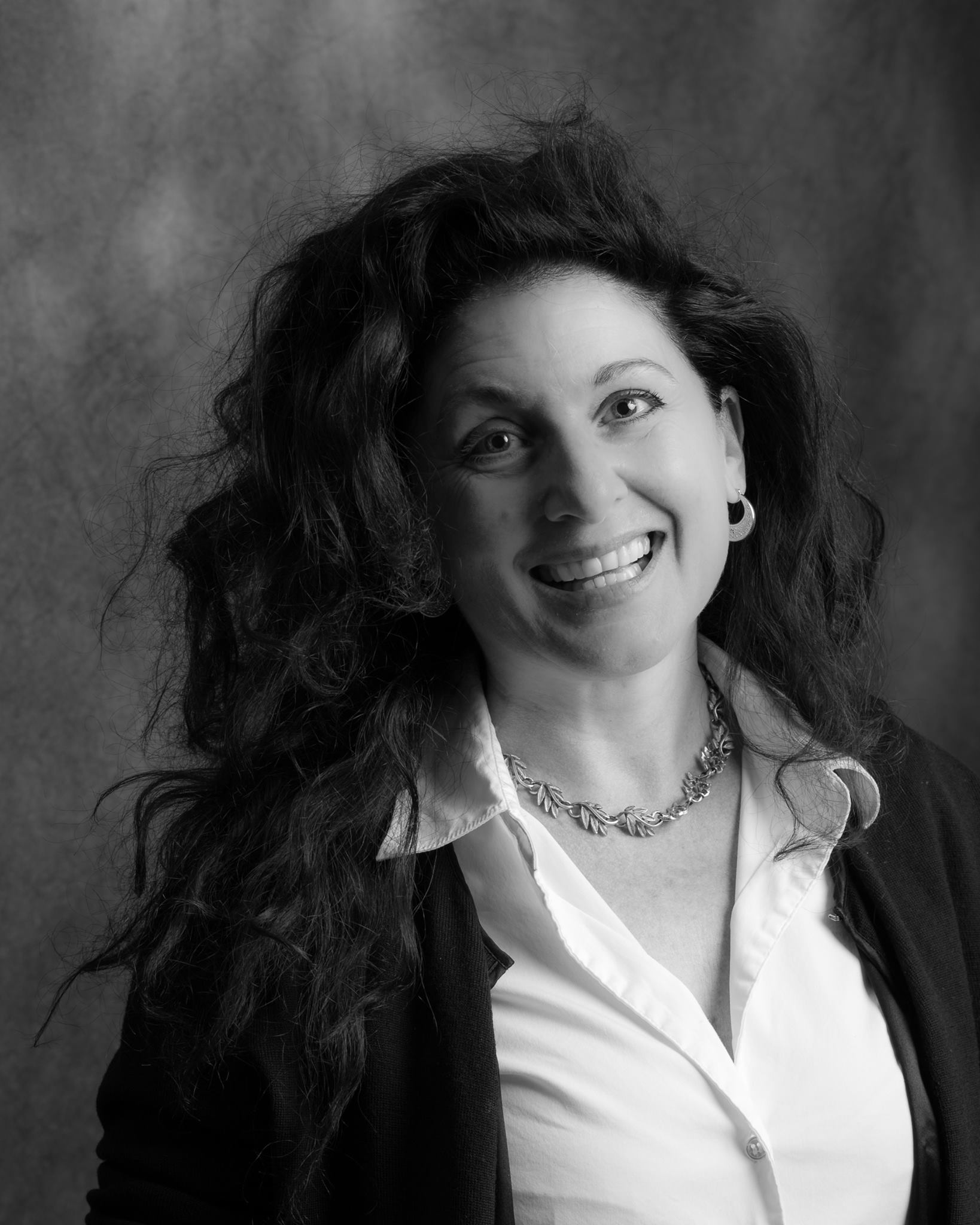
Dr. Paula Bruno, Ph.D., L.Ac., is a licensed acupuncturist and herbalist, an AOBTA-CP traditional Chinese bodywork therapist, a health coach, and an author. She maintains an active and growing practice at her Austin, TX office. Dr. Bruno is also available for distance appointments for wellness consultation or coaching.
In her first career, she was a Spanish professor.
Dr. Bruno’s specialties as a Chinese medicine practitioner include: • Musculoskeletal health (acute or chronic pain relief; Ehlers Danlos syndrome & hypermobility support) • Digestive support, gut health, and weight loss • Aesthetic treatment, including scar revision • Men’s health • General preventive care and wellness support for all persons.
She is the author of Chinese Medicine and the Management of Hypermobile Ehlers Danlos Syndrome: A Practitioner’s Guide. Dr. Bruno also maintains a second website, holistichealthandheds.com, with resources and information curated specifically for people with hEDS and HSD.
When you are ready to discover what traditional medicine plus a vibrant and engaged approach to holistic health can do for you, either contact Dr. Bruno or book an appointment online.
*****
*****
Two Hearts Wellness does not accept paid advertising on this website & only uses strictly necessary cookies.
Note: Material on this web site site is not intended to diagnose, prevent, treat, or cure any disease, illness, or ailment. A Chinese medicine practitioner in Texas identifies syndrome patterns but does not diagnose illness. Material on this web site does not purport to identify syndrome patterns.
*****
- “Find An Acupuncturist: How To Find The Best Chinese Medicine Practitioner For What You Want To Accomplish” is an older essay on this blog; for resources when you are complicated, see “Acupuncture & EDS: How to Find a Practitioner of Chinese Medicine When You’re a Zebra,” The second essay can be found on my EDS/MCAS/dysautonomia-dedicated website, holistichealthandheds.com, ↩︎
 Two Hearts Wellness