~~~~~

Mid-August through to the fall equinox on September 22nd is a period of neither-this-nor-that. It’s not really summer, not any longer; but it’s not yet fall, either. Instead, at least according to Chinese medicine, it is a fifth season known as late summer. This is a transition period between yang (spring and summer’s expansive energy) and yin (fall and winter’s slowness and contraction).
It is a moment of pausing, and an in-between.
Chinese medical thought makes interrelations clear, so to understand the season it is helpful to also consider its correspondences. As with my other blog posts on the subject of seasonal living, I touch upon the four key elements of this topic, namely: environment, organs, food, and mood.
To explore the practice of living seasonally according to Chinese medicine’s values, take a look at Living With The Seasons According To Chinese Medicine: Spring Tips For Health And Happiness and its companion piece, Living With The Seasons According To Chinese Medicine: Summer Tips For Health And Happiness. Essays for fall and winter are forthcoming, so stay tuned…
Late summer is associated with the Spleen and Stomach, the color yellow, and the earth element. Its flavor is sweet and its emotion is worry. The spirit housed by the Spleen, called the yi, pertains to the intellect. By combining these associations, we see the mood of the last weeks of August and the first two thirds of September, don’t you think?
Notice, for instance, that health concerns in the realm of emotion and digestion trace back to the Spleen if it is weakened or not functioning in a balanced way. Organ and mood, as with the other seasons, are intimately connected.
Rumination, or looping intrusive thoughts, signal an imbalance in the Spleen. Stress snacking in response to chronic anxiety is a call to pay attention to your digestive system and this organ, as are cravings for sweets. If there is IBS, bloating, fatigue and other similar, your practitioner of Chinese medicine would also address the wellbeing of your Spleen.
Gut health is the foundation of your overall wellbeing and when you include Chinese medicine in your healthcare practice you will find that your practitioner takes this subject to heart. For more, see Gut & Digestive Health: Three Reasons Why It Matters & How Chinese Medicine Can Improve Yours.
Are you able to focus and get your work done? That’s related to the spirit housed within your Spleen, or the yi (intellect). It may sound funny if you don’t know a lot about Chinese medicine, but whether you frame things in terms of blood sugar levels and digestive strength or the Spleen’s duties and its spirit, the yi, you’re telling at the same story. In effect: stability in this realm does have an effect on one’s capacity to think and remain on track.
With respect to the environment?

Think about wild animals and how they are changing their habits right now. Now think about yourself, and how you get ready for the seasonal transformation.
As the yang of summer turns towards the yin of fall and winter, living creatures begin to shift their habits. Animals prepare for winter by in various ways, and their tactics include slowing down in preparation for hibernation, movement to warmer realms (migration), fattening up, growing a thicker fur coat, and/or stockpiling food resources. Humans do similar things, if you ponder it. It depends on where you live, but even in Texas people start thinking about pulling the box of thicker socks and fuzzy sweaters out of storage and they may decide to pay attention to whether or not they are about to pack on winter pudge that is neither wanted nor needed.
Late summer is the time to set down a foundation for the slower period to come. To do this in a mindful way, consider the following:
Seasonal eating is smart. Now is not the best time for cold salads or green smoothies. Late summer’s color is yellow, remember, so practitioners of Chinese medicine will suggest Spleen-pleasing foods in that category. Do you like yellow squash or bell pepper? What about sweet potato or yams, corn, or carrots? Adding some yellow or orange to your plate can be good for the Spleen at this time.

On the subject of food and digestion, you can also choose to be attentive to your earth energy and what you are taking in on a psycho-emotional level as well. Now is the time to begin turning inward, not expanding outward. If you tend to your mental health now and don’t scatter yourself, you may find that you can bolster your inner resources. Later, as a result, you might then be in a better frame of mind when winter is in full gear and the cold weather or oppressively cloudy sky makes being cheerful a bit more of a challenge.
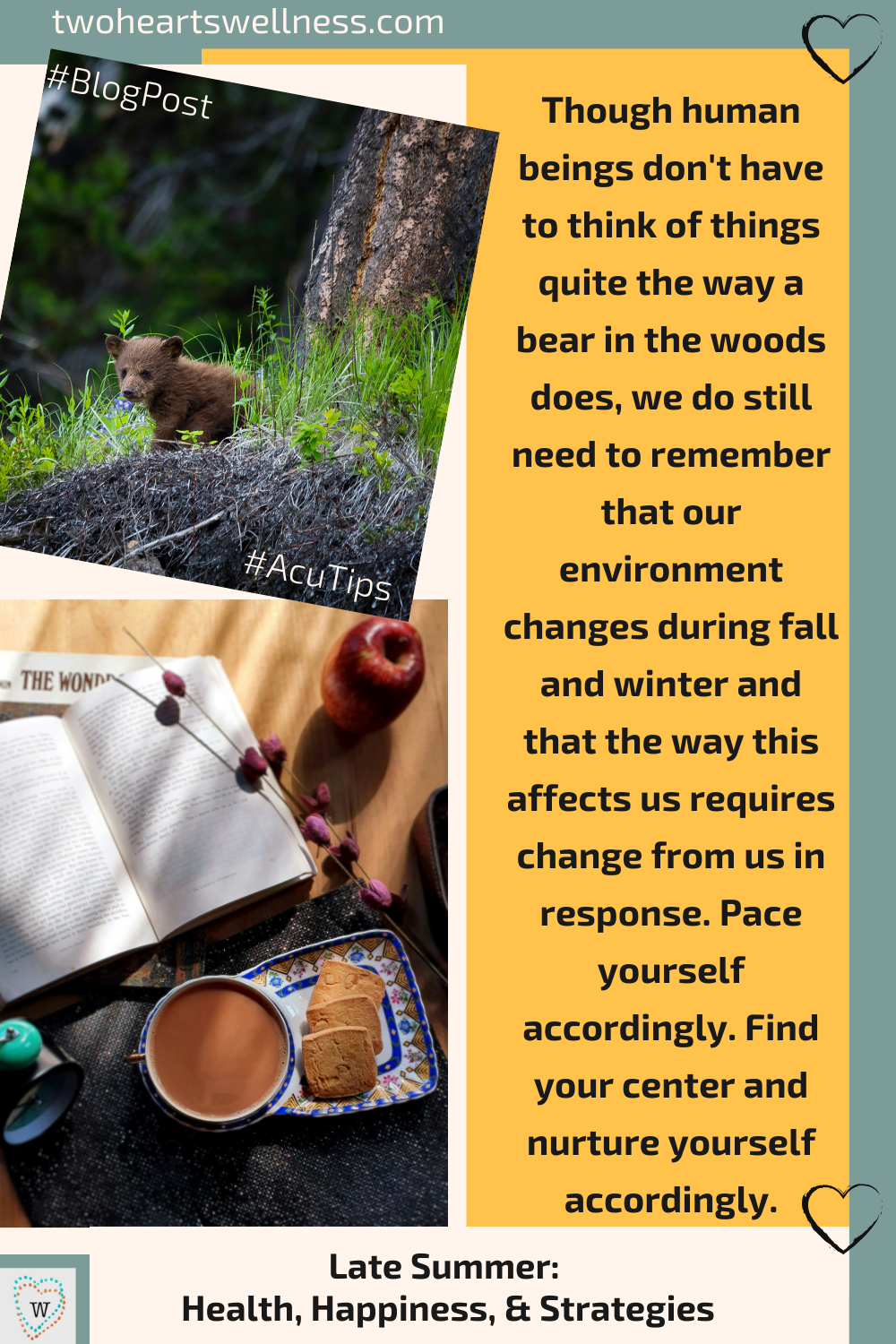
Mindfully nurture your core and inner being as you prepare for fall and winter. This is good for the yi and it keeps your energy focused where it should be: on yourself and your loved ones and, at the most primitive and instinctive level, on the task of preparing for your own and your collective survival during the upcoming winter. Human beings don’t have to think of things the way a bear in the woods does, and gearing up to make it through the winter now is nothing like it was in the epoch of ancient China when this philosophy came into being. But even today, we do still need to remember that our environment changes during fall and winter and the way this affects us does require change from us in response. Pace yourself accordingly. Find your center and nurture yourself accordingly.
If you have never tried it before, now is a great opportunity to see what Chinese medicine has to offer you (and yes, there is a blog post for that). The ancient roots of this tradition are alive and well even today in how it see our bodies and our spirits as reflective of the natural world surrounding us. When we live in harmony with seasonal transformations, according to Chinese medicine, we flourish.
Do you want to learn how to shift gracefully with the seasons and develop your own best level of personal health and wellbeing?
*****
*****

Dr. Paula Bruno, Ph.D., L.Ac., is a licensed acupuncturist and herbalist, an AOBTA-CP traditional Chinese bodywork therapist, a health coach, and an author. She maintains an active and growing practice at her Austin, TX office. Dr. Bruno is also available for distance appointments for wellness consultation or coaching.
In her first career, she was a Spanish professor.
Dr. Bruno’s specialties as a Chinese medicine practitioner include: • Musculoskeletal health (acute or chronic pain relief; Ehlers Danlos syndrome & hypermobility support) • Digestive support, gut health, and weight loss • Aesthetic treatment, including scar revision • Men’s health • General preventative care and wellness support for all persons.
She is the author of Chinese Medicine and the Management of Hypermobile Ehlers Danlos Syndrome: A Practitioner’s Guide. Dr. Bruno also maintains a second website, holistichealthandheds.com, with resources and information curated specifically for people with hEDS and HSD.
When you are ready to discover what traditional medicine plus a vibrant and engaged approach to holistic health can do for you, either contact Dr. Bruno or book an appointment online.
*****
*****
Two Hearts Wellness does not accept paid advertising on this website
Note: Material on this web site site is not intended to diagnose, prevent, treat, or cure any disease, illness, or ailment. A Chinese medicine practitioner in Texas identifies syndrome patterns but does not diagnose illness. Material on this web site does not purport to identify syndrome patterns.
*****
 Two Hearts Wellness