Different cultures mark their major time shifts in different ways. From how we greet spring to the way we prepare for winter, everyone has their method and manner. Same goes for important birthdays and other life milestones. Still, being aware of time passing and being present for one’s own individual daily experiences can be challenging, particularly when so much is going on in the world right now. It is an important life skill though. You don’t want to miss out on your own life, do you?
For whatever reason, it seems that many of us have lost our sense of time passing. One minute it’s the beginning of summer and we blink and … Hold on, where did the time go? Now it’s holiday season and whoops…a whole new year has been set into motion.
Where did the time go?
*****

*****
If you’re reading this in February, you’re right on time for thinking about a new year. Even if you’re reading this in June, the purpose of this blog post is about time and transition. This blog post starts with the Lunar New Year, moves inward to the subject of seasonal change, and arrives at the topic of trauma, both individual and collective. This post offers an invitation to consider how to mark temporal shifts in a healthier, more mindful way. It’s also a reminder to pay attention to how quickly the years are passing. It is a reminder to pay attention to time.
No matter what month it is right now, my question is: are you paying attention to the passage of time and to where you are today?
What about the Chinese Lunar New Year?
Setting January 1st as the first day of a new year is comes from Roman times and culture. A new year in China is a different story. In Asia, the two-week period starting with the new moon closest to the midpoint between winter solstice and spring equinox is a celebratory period called (depending upon who you ask), Chinese New Year, Lunar New Year, or Spring Festival. During my second graduation program (this would be the Chinese medicine one), I heard it referred to mostly by the first two terms but I have heard the third as well.1
This is a period of ritual that begins by cleaning your house to get rid of old energy and dust from the past. It includes family activity, some of which is more somber (cleaning gravesites and lighting candles) and other customs that are more fun. These include festive gatherings, dinners, and giving gifts of money in red envelopes. At the end of the two weeks is the Lantern Festival, which is marked by festivals and lion dances and parades. The lantern light is purported to guide home lost souls.
*****
*****
My version of the Chinese New Year is definitely a hybrid, to be honest. When I was in my twenties I lived in Spain and Italy, I was a Spanish professor for the first half of my adult life, and I am of Mediterranean heritage anyway. As a practitioner of Chinese medicine, I’m now that much more of a hybrid of multiple cultures and languages. The longer I practice Chinese medicine, the more I find that certain Chinese things (at least, the versions I know) are becoming part of my worldview and habits. To my patchwork of native and adopted cultures, now I have added my connection to China via Chinese medicine.
Consequently, I tend to see the Lunar New Year in a somewhat personalized way. I kind of see it as my do-over period where I revisit New Year’s resolutions that, for whatever reason, didn’t take by mid-January or early February. That’s not the original intent of this holiday period, but it makes sense to me at present and will probably manifest differently if you ask me about it ten years from now. I also am inspired by and interested in how Asian cultures will spend two weeks on this transition holiday in comparison to the one day, January 1st, that is supposed to mark such a big turning point as the closing of one year and the beginning of a new one.
It’s a beautiful holiday no matter how or why you celebrate it, and if you find that you gain comfort and inspiration from learning about new culture and cultural practices, well…I think that this is a welcoming holiday that will make space for you, too.
Time markers: the seasons (and Chinese medicine)
Are you the kind of person who focuses on details? Or, instead, do you look at the big picture? Maybe a new year’s marker is a bit much, but is your birthday be a better placeholder of longer timeframes for you? How about being attentive to seasons? Maybe it works best for you to mindfully pause to reflect at the beginning (or end) of each month.
*****
*****
There are so many things that I love about the way Chinese medicine views things. One important consideration is the shift of seasons. We think ahead, in Chinese medicine. All things are either yang (active, bright, warm, etc.), yin (passive, dark, cold, etc.) or in-between (pivotal). Each has a bit of the other within and all are ceaselessly moving.
What this means for seasons is that we enjoy fall (yin within waning yang) and prepare for winter (most yin) during the earlier season. We know, as we are enjoying the spring (yang within yin), that summer (most yang) will follow and after that, the cycle begins anew. It is a beautiful way to be present for seasonal shifts, don’t you think? You are aware of your environment and you also keep in mind that things are always in a process of change…and so are you and so should be your health habits. The destination may be our inspiration but it’s the journey that counts, if you ponder it.2
This approach also reminds us to be good stewards of our environments. We are part of the world around us and the world around us is a part of us. We reflect our environment and our environment reflects us. What can you do, then, to be present for and engage with your environment and what is reflected around you and from within you?
And what, then, if things surrounding you are challenging, or even traumatizing?
The eternal now of trauma
In my first career (I was a Spanish professor) my scholarly area was national trauma (civil war, dictatorship, genocide, and torture) and how said big-picture trauma filters through art and literature. You don’t need a Ph.D. to know that things like the COVID pandemic and its aftermath, not to mention current events, have left many of us with not only collective trauma but also individual psycho-emotional scars. And being in a state of trauma is to be in an eternal now. All the old scars? They are now. The current trigger? Now.
Trauma is timeless.
And trauma makes us lose connection with real time, the actual present moment, and the markers of what is happening within a continuum. Being present for your own life is that much harder, then, because time flies and trauma sticks (and gets you stuck in an eternal now of trauma). It’s pretty easy to get trapped into a vortex of trigger-response and it’s not altogether that simple to break the cycle. Have you ever had a rough start to the new year, and by the second or third week of January you feel like the year is old and you already want it to be over? Or what about looking at the clock and noticing that the day has gone by but you didn’t even notice it? Whether it’s the passage of a year or the blink of an eye that’s a day, being stuck in a trauma state creates a loss of connection to time.
Healing from trauma is a way of reclaiming your time.
*****
*****
Note: In my estimation, it is healthiest and safest to work through deep trauma with a trained, licensed psychotherapist. Let’s just be clear about that. But what if you already have a therapist, or you don’t feel you need one just yet, or you don’t have one available to you at this time?
Without going off on too big of a tangent, I will say this much: gut health and good sleep are two crucial steps to becoming more grounded and present in your own life.
As people who know me as a practitioner (patients, health coaching clients, anyone reading my blog posts) well know, my answer to everything is “gut health.” And yes, when a person is navigating ongoing trauma, it can help to stabilize gut health (and blood sugar, for that matter). It can be hard to avoid sugary treats and ultra-processed comfort foods when struggling but the long-term effects of them only compound health challenges. Sub-optimal gut bacteria can contribute to poor moods. Fluctuating blood sugar can cause symptoms like shakiness, irritability, a sense of impending doom, and more. (Don’t get me rolling on the topic of histamine intolerance and other similar).
And sleep? When a person’s sleep is disrupted, it’s that much harder to regulate moods during the day. And driving while sleep-deprived can be as dangerous as driving while intoxicated.
Resolving gut health and sleep issues are just two ways to calm your autonomic nervous system and your fight-or-flight response. As a practitioner of Chinese medicine and a health coach, my prescription for health includes addressing both. With my patients (those are the people who come for in-office treatment) and my clients (those would be my health coaching peeps), I will also share lifestyle support (breathwork practices, resting-and-digesting regimens), and guided acupressure protocols. For patients, there’s acupuncture, herbal medicine, and bodywork therapy.
*****
*****
It’s near-impossible to be present when you’re in the throes of fight or flight, and when it’s ongoing? That much harder. Suddenly, and before you know it, a year has gone by…two years… a lifetime. And once it’s gone, you don’t get it back. If you can’t do much about sleep or gut health, is it available to sit down and figure which element of your health and wellbeing you can tend to in a loving fashion? Being aware and mindful of your body and its reactions to the world around it is a healing step in a quest for presence. Everyone is different. Maybe your best project is to focus on reducing pain or healing a scar or … well, it could be anything, and the first step is to identify and be with the issue.
But getting unstuck and being able to move forward does, especially if trauma is involved, require intent and focus and–yes–presence.
In conclusion…
The initial premise of this blog post was supposed to be a cheery essay about the Chinese New Year. When I sat down to write, though, where it took me was to the question of time and the realities of trauma. I guess that’s the Spanish professor in me, and my scholarly specialty asserting its relevance to my work as a holistic healthcare provider. At the time of this writing, we’re a month into the new year according to the Gregorian calendar and the Lunar New Year is coming soon. A lot is going on in the world right now and it feels like time is already flying. As it has so often lately, as a consequence, my mind turned to the practice of presence, and of breathing. Being here and available for my own life is a practice and I’m a dedicated practitioner. I expect that I will be so for the rest of my days.
My hope is that you, dear reader, will consider what is written here and that it will inspire you to ask yourself a few questions about presence and being present. We’ve got a long haul ahead of us, I think. It makes a difference if it’s available to take good care, to remain present, and to move gracefully through this miraculous thing called life.
Where, then, do you want to begin?
*****
*****
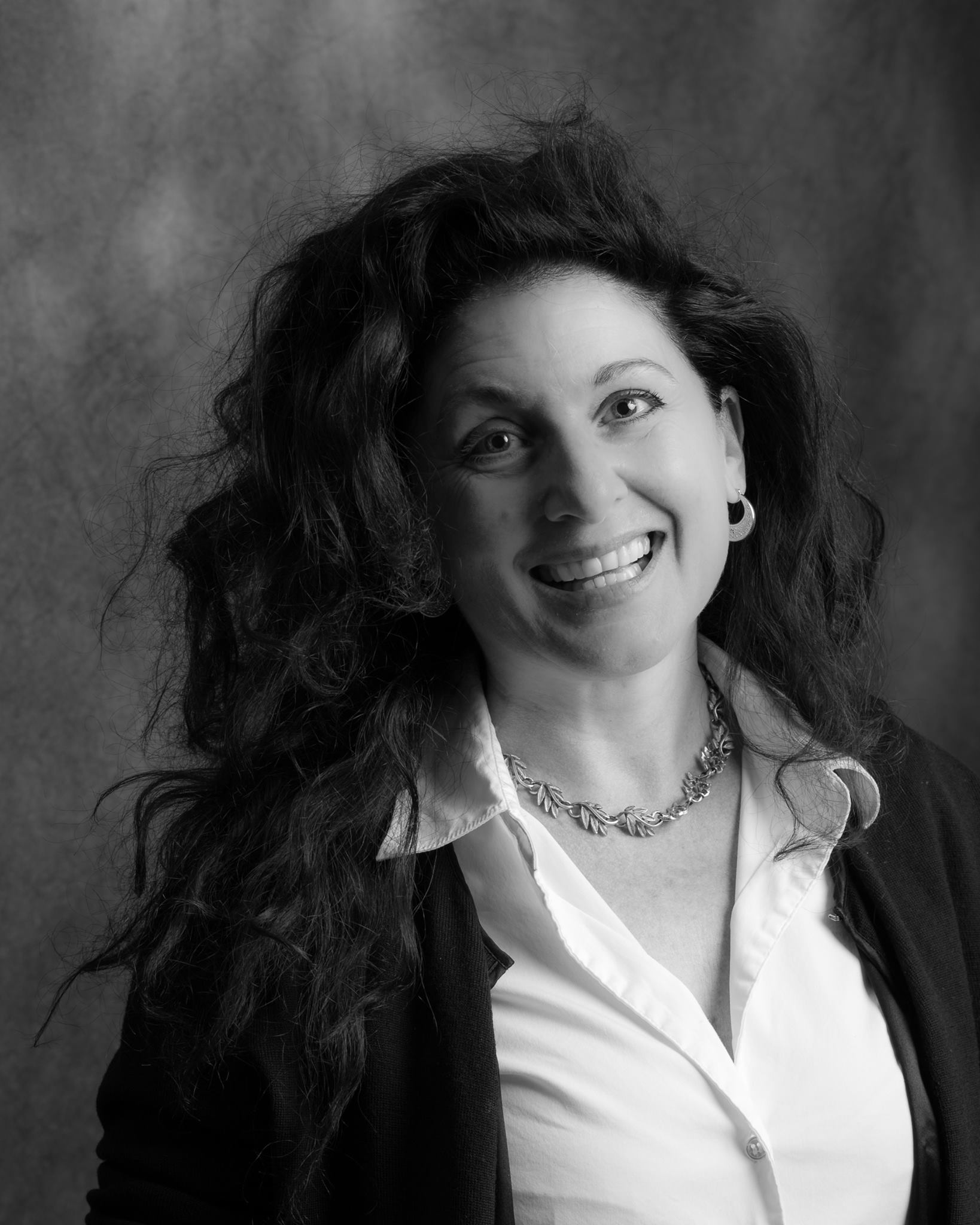
Dr. Paula Bruno, Ph.D., L.Ac., is a licensed acupuncturist and herbalist, an AOBTA-CP traditional Chinese bodywork therapist, a health coach, and an author. She maintains an active and growing practice at her Austin, TX office. Dr. Bruno is also available for distance appointments for wellness consultation or coaching.
In her first career, she was a Spanish professor.
Dr. Bruno’s specialties as a Chinese medicine practitioner include: • Musculoskeletal health (acute or chronic pain relief; Ehlers Danlos syndrome & hypermobility support) • Digestive support, gut health, and weight loss • Aesthetic treatment, including scar revision • Men’s health • General preventive care and wellness support for all persons.
She is the author of Chinese Medicine and the Management of Hypermobile Ehlers Danlos Syndrome: A Practitioner’s Guide. Dr. Bruno also maintains a second website, holistichealthandheds.com, with resources and information curated specifically for people with hEDS and HSD.
When you are ready to discover what traditional medicine plus a vibrant and engaged approach to holistic health can do for you, either contact Dr. Bruno or book an appointment online.
*****
Two Hearts Wellness does not accept paid advertising on this website.
Note: Material on this web site site is not intended to diagnose, prevent, treat, or cure any disease, illness, or ailment. A Chinese medicine practitioner in Texas identifies syndrome patterns but does not diagnose illness. Material on this web site does not purport to identify syndrome patterns.
*****
*****
- If you’re interested in learning more about the terminology surrounding this holiday, Reddit has a good thread you might want to read. People definitely have thoughts about whether or not it’s the Lunar New Year, Chinese New Year, or Lantern Festival and why the name should be (or is) so. ↩︎
- Naturally, there are blog posts for this topic. Refer to “Living With The Seasons According To Chinese Medicine: Spring Tips For Health And Happiness,” “Living With The Seasons According To Chinese Medicine: Summer Tips For Health And Happiness,” “Are You Ready For Fall? (Living With the Seasons According to Chinese Medicine),” and “Living With the Seasons According to Chinese Medicine: Strategies for a Happier, Healthier Winter” for discussion of each season and how to live well within it according to Chinese medicine. And, since we have a fifth season in this tradition, you can also check out “Late Summer: Health, Happiness, & Strategies,” which offers insight into the transition period of summer to fall. ↩︎
 Two Hearts Wellness