Do you feel like you are in control of your own wellbeing? Or are you left with a sense that your only option right now is to react to whatever comes down the pike? In other words: whatever may be, whether it lifts you up or knocks you down, will be…and that is that, cat.
Don’t you prefer to walk with the assurance that you have agency and a voice in your own personal destiny?
There is a lot going on in the world at present. Meantime, the seasons continue to change and the universe keeps marching along to its own beat. How can a person live well despite the ups and downs and the constant of change? As a health coach and practitioner of Chinese medicine, I sometimes find it helpful to consider ways to consider these questions from the perspective of classical Roman thought and ancient Chinese philosophy. That may seem an odd pairing, but I was a Spanish professor in my first career and I am of Mediterranean heritage so the mix is not so unexpected after all. And now, with so much happening at such a rapid pace, I wonder if a look back to the tried and true will provide some inspiration.
What are your health goals for today? Where do you want to be in six months, or a year from now? I’m talking mental health, spiritual health (and that doesn’t need to mean religious-spiritual; by this, I mean in your heart and soul), and physical health. What are the factors that surround you now, what can you change today, and where do you want to go so that tomorrow you are in a better place?
Some of your answers will relate to things that are hard to change. I wrote a book on Chinese medicine and Ehlers Danlos syndrome and I work with a good number of people who live with this challenging condition. I do not push the line that kale, yoga, and your attitude can change everything and magically make your life perfect. But everyone can make some shifts and move in a better direction, no matter what. This I do believe. Whether it’s in response to chronic health issues, or be it a matter of the common road blocks that so many people live with, like gut health problems, anxiety or depression, diabetes, being overweight, and/or [fill in the blank with your situation] … yes, there is always something a person can do to ameliorate, improve, and/or resolve their particular concern or concerns.
Part of being able to change comes from figuring out where you derive your sense of power. How can you develop a sense of control over your own life and wellbeing?
*****

What about considering your relationship with change?
Wu wei, in Chinese thought, is an element of a philosophy known as the the Tao, or way. The natural order of the universe has its rhythms and path. The best approach to life, then, is to go with the current in a non-grasping fashion. You understand the ebb and flow of the big picture. You recognize your place within it. You are aligned with the greater cosmic schema, the Tao, and do not waste energy going backwards against the stream. When we speak about harmony, wu wei offers a perfect example of what it means to live well and with steadiness.
In contemporary life, this might look like a process of cultivating self-knowledge and awareness. It can be choosing to live in tune with the seasons. It can be when we recognize that we don’t have to show up for every fight we’re invited to, or we decide that this is not my circus and those are not my monkeys. Good boundaries when life is chaotic can be a means of living by the precepts of wu wei. In terms of health, it can be a choice to find that happy medium. No, you do not need to become flawlessly fat-free to be healthy. Yes, you can have a dessert now and then, just maybe not every day or so much that you become diabetic. Etcetera. Whatever, your situation may be, it helps to strategize and move forward at a reasonable, consistent pace. Balance, pacing, and self-awareness, can get you far.
I saw a meme as I was finishing this post and it said “less fight, more flow.” That’s really it in a nutshell, actually.
*****

What about reviewing the way you show up in life?
Sprezzatura is a social concept, first introduced in Baldassare Castiglione’s 1528 The Book of the Courtier. It’s the OG version of not being a try-hard or a pick-me. Instead, the goal is to be charming and graceful in social situations and to make things look effortless in so doing. I think that there are a few benefits to this practice. At least, it makes it easier to get along with others; in addition, it can be fascinating to cultivate this skill as you observe the people around you. In terms of general lifestyle, Castiglione’s ideal is an invitation to practice what you might view as an Italian-style form of wu wei.1
In terms of health, I look at the nonchalance that this attitude embodies as an inspiration to not overdo. In other words, no need to become orthorexic, or obsessed with “clean eating” on the one side, or out of control and eating whatever, whenever on the other side. It can be learning about body movement and awareness to a healthy and realistic level, not becoming someone who either never exercises or does so to the exclusion of other aspects of life. It’s being aware of health trends but not being consumed by them. And on the subject of trends? There’s no impetus to develop an online persona that competes with the latest influencer. There’s no overwhelming FOMO that drives a person to overconsumption and/or anxiety about not having, being, or doing every single cool thing that the advertising industry wants us to ingest, acquire, and/or imbibe.
Both of these philosophies align with the notion that we do not have a lot of control over the big picture so, instead, the cultivation of self makes it easier to live with uncertainty, change, and–let’s be real here–other people. And what we progress towards is a middle ground that acknowledges the realities surrounding us (and they may not always be pleasant) but does not wallow in them.2
*****
So what does fortune’s wheel have to do with any of this?
The next question relates to the biggest big picture, namely: fate, destiny, karma, and/or fortune. This is a whole topic if you put it into the context of the health or lack of same. Is it your genes or your lifestyle? Is it nature, or is it nurture? Why do some people enjoy great health no matter what they do, while others suffer despite their dedicated effort to improve their wellbeing? What can anyone do against microplastics and other environmental damage? Nobody plans to get in a car accident that changes their life forever, but that could happen to any one of us. And certainly, COVID taught us all that global health shifts can turn into a tsunami that can drag us all under, to one degree or another.
Sometimes, and I know we all know this, how we’re doing really does come down to fate (or whatever you want to call it, from the will of a judgmental deity to the vagaries of fortune or to karma). Pick your narrative, but whatever it is, it says that you cannot do anything about what is meant for you, be it good or bad.
Human beings have had stories about why this is so since forever. The goddess Fortuna and her wheel dates back to ancient Rome. When she looks upon you with benevolence, you ride high; when the wheel turns (and it always does), you fall. It’s one way to tell the story of why we win and lose in life, and reminder that nothing stays the same. The wheel turns and where you find yourself in terms of luck or tragedy is the result of its ups and downs. You can’t fight it. It is what it is.
The concept of fortune that rises and falls according to the whims of a goddess remained popular throughout the medieval period. It’s an entrenched concept even now, although contemporary language might refer to karma or fate rather than Fortuna. Either way, this posture reflects a fatalism that also does have its challengers in the modern mind of today. For example, there are some folks today who believe that what you believe, you can achieve. If you raise your vibration, you’ll manifest. And so forth.
So back we go, then, to Chinese medicine and the exchange of one thing for the other, its opposite, and the wu wei argument for a middle path.
Chinese medicine has an interesting viewpoint when it comes to change and balance. For us, that would be the interplay of yin and yang. Western biomedicine has homeostasis: not too much, and not too little of what’s needed for a healthy system. This certainly corresponds with the Chinese perspective on right balance in the body. What’s different about the Asian version, though, is that there is a much larger philosophy attached to it. Homeostasis for Chinese medicine is the result of yin interacting with yang and it is the result of one becoming the other in an endless cycle of interchange and exchange. We also see this in the big picture (how the seasons change) and the smaller, daily acts of living, working, resting, and getting up to do it all over again. There is a center, or pivot point, called the shaoyang (although that is a whole new blog post).
Point being? Change is part of being alive, whether it is reflective of fortune’s wheel or day turning into night or yang becoming yin or the full moon turning into…well, you get the picture. And part of becoming, remaining, and adapting within a person’s healthy best is that ability to navigate change. It’s getting to a place of knowing when to push and recognizing when to pull and then step aside.
*****

How can you get there in your health journey?
As a health coach, I encourage clients to consider where they locate their power and to consider how they choose to engage with it. Taking a long list of supplements or falling into extreme eating habits affixes your power to something else, not your own daily life + genetics + your wild cards and their effect your metabolism or gut microbiome. Deciding that you’re not worthy or attractive unless your weight is a certain number does the same. Staying with trauma rather than gently and with dedication processing it and moving on is another way to concede agency to something else not one’s own.
It is possible to do better, and to do so in an affirming way that creates the opportunity to thrive. It’s a matter of identifying one’s wild cards (the special factors that affect the person the most), and of knowing what one can change, and of changing those things in a way that’s not obsessive or try-hard. It’s a matter of self-knowledge, and knowing one’s triggers, strengths, and weaknesses. It may mean taking genetics into consideration, if they are truly a factor, but also of recognizing that it is certainly possible to bolster health in other ways that do not rely on the mercy of unhelpful genes.
Have you ever thought about working with a health coach? When you work with a coach, you enjoy the benefits of personalized support and accountability as you identify your goals and learn healthy ways to achieve them. Or what about trying Chinese medicine? When you go to an acupuncturist for treatment, you are accepting and receiving treatments that intend to balance your inner environment. Whether it’s a treatment, as with Chinese medicine, or a process of learning and changing daily habits, as with health coaching, ideally you identify and keep in mind where you source your power and how you deal with uncertainty.
No matter what you do, though…you’re on a healing path when you learn how to engage with your life with mindfulness and a good sense of what can be changed and what, maybe, to let slide. In other words: less fight, more flow. With this approach, dear reader, you are well equipped to move forward with shifts in your environment in a proactive but not grasping manner.
And therein lies your power, don’t you think?
*****
*****
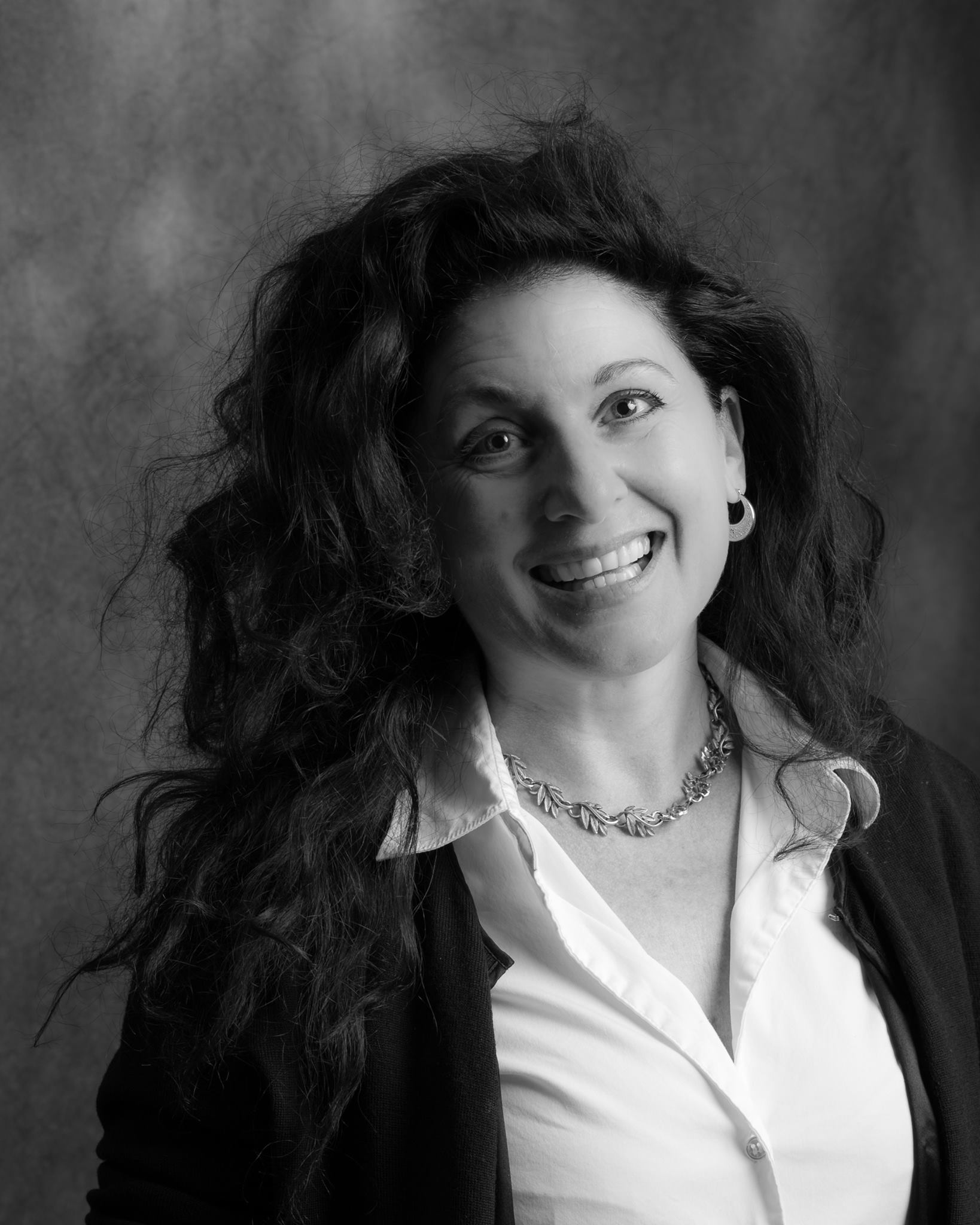
Dr. Paula Bruno, Ph.D., L.Ac., is a licensed acupuncturist and herbalist, an AOBTA-CP traditional Chinese bodywork therapist, a health coach, and an author. She maintains an active and growing practice at her Austin, TX office. Dr. Bruno is also available for distance appointments for wellness consultation or coaching.
In her first career, she was a Spanish professor.
Dr. Bruno’s specialties as a Chinese medicine practitioner include: • Musculoskeletal health (acute or chronic pain relief; Ehlers Danlos syndrome & hypermobility support) • Digestive support, gut health, and weight loss • Aesthetic treatment, including scar revision • Men’s health • General preventative care and wellness support for all persons.
She is the author of Chinese Medicine and the Management of Hypermobile Ehlers Danlos Syndrome: A Practitioner’s Guide. Dr. Bruno also maintains a second website, holistichealthandheds.com, with resources and information curated specifically for people with hEDS and HSD.
When you are ready to discover what traditional medicine plus a vibrant and engaged approach to holistic health can do for you, either contact Dr. Bruno or book an appointment online.
*****

*****
Two Hearts Wellness does not accept paid advertising on this website
Note: Material on this web site site is not intended to diagnose, prevent, treat, or cure any disease, illness, or ailment. A Chinese medicine practitioner in Texas identifies syndrome patterns but does not diagnose illness. Material on this web site does not purport to identify syndrome patterns.
*******
- For a really nice comparison between sprezzatura and wu wei, see “”Sprezzatura and Wuwei: A Daoist Approach to European Courtly Grace.” The latter is a bit of a long read but it is definitely worth the time. ↩︎
- Note: This doesn’t mean not protesting injustice or advocating for change, but that topic is a whole new blog post and for this one, at least, the focus is on wellness and self-cultivation for personal health. ↩︎
 Two Hearts Wellness